Christmas Beers Bring Christmas Cheer

What would the holidays be without alcohol? Copious and copious amounts of alcohol in all forms to help you get through the insanity of family, shopping, holiday parties and the like. Fortunately, there are plenty of holiday appropriate beers to help you get through it all. Here’s what I enjoyed during this week.

After having our own mini Christmas at our new home, my wife and I drove back to my parent’s house in Georgia to celebrate Christmas with them. I have the good fortune of having an easy-going, non-dysfunctional family, so I don’t need a lot of alcohol to help me cope. But that didn’t stop me from bringing along a bottle of St. Bernardus’ Christmas Ale to enjoy and share with loved ones.

photo 1

At 10%, the spiced Belgian strong dark ale does plenty to keep you warm and toasty. A malty nose brings hints of cocoa, plums, caramel, black pepper, cloves and that classic Belgian yeastiness. A similarly complex taste follows, with a strong effervescent quality leading off flavors of berries, plums, cocoa powder, leather, tobacco, sweet bread, cinnamon and other spices. St. Bernardus always impresses me, but it also impressed my younger brother – a newly 21-year-old frat boy – and my dad, whose tastes lean toward “dark, heavy stuff.” It was a good way to warm up on Christmas Eve.

After returning home to Columbia on Christmas Day, my wife and I tucked in to some holiday selections from my cellar. We started with a 2009 bottle of Samichlaus Classic, a 14% doppelbock from Austria that previously held the title of strongest beer in the world.

photo 2

At 14%, there’s just a slight hint of booziness on the nose, accompanied by a big, sweet malt character, hints of rum-soaked raisins, caramel, figs and a bit of maple syrup and just a slight alcohol burn on the back. The alcohol certainly hits you more on the taste, but it fades quickly into this sweet, rich, full-bodied blend of caramel, toffee, butterscotch, figs and a big malty sweetness with an almost hard candy quality. The sweetness is definitely cut well by the alcohol, which you can feel warming in your chest after a few sips.

As we settled in for the annual Doctor Who Christmas special, I popped a bottle of the 2011 Santa’s Little Helper imperial stout from Port. Last Christmas, I enjoyed the bourbon barrel-aged version but help on to the standard version for this year.

photo 3

The coal-black 10% imperial stout presented with aromas of bittersweet chocolate, a touch of booze and a little bit of licorice, all underneath a cozy cover of big roasted coffee and espresso. Those roasted malts impart a big bitterness on the front of the tongue followed with a bitter coffee finish. There was a ton of espresso, dark chocolate, roasted malts and cocoa on it, but it’s not overly chocolatey or sweet at all. There may have been a slight infection in my bottle as there was this strange almost cough syrup quality on the finish. There was a phenolic burn on the back, kind of like the sweeter alcohol finish from NyQuil. It didn’t turn me off at all, and it honestly kind of worked with the bitterness.

The third of four Christmases this year was spent at my mother-in-law’s house on Wednesday. With all due respect to my in-laws, they are a bit more … eccentric than my family, and two little ones running around only add to the insanity. That’s why I was happy to walk in to the middle of a holiday beer tasting orchestrated by my sister-in-law, which included the St. Bernardus Christmas Ale, Rogue‘s Santa’s Private Reserve Ale, Grand Teton‘s Coming Home Ale 2012 and, for dessert, some Lagunitas Cappuccino Stout. I also got sent home with bottles of each, as well as a Rogue Farms Single Malt Ale and a Westbrook Dark Helmet. Add that to the two six-packs of SweetWater Festive Ale my brother got me and the SweetWater IPA and Terrapin Liquid Bliss “reinbeers” from my mom, and this was quite a holiday helping.

Whatever you celebrated this season, and whatever you’ll celebrate in the weeks to come, may your world be filled with delicious brews and good times. Cheers to all, and to all a good night.

What’s the Hype All About? (The Session #70)

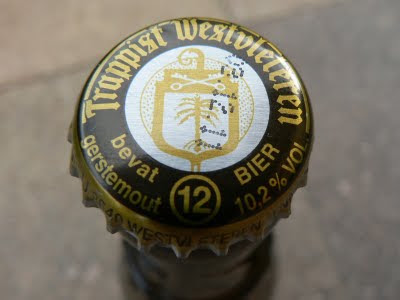
Welcome to Planet Hype! Black Tuesday, Darkness and Kate the Great on Aisle 1. Westy 12 on draft.

It’s hard to say exactly where the hype surrounding any particular beer begins, and why some beers get much more hype than others.

Does it begin with the brewery when they announce they’re concocting some quad-hopped bourbon wine whiskey barrel-aged imperial IPA double stout brewed on the peak of a mountain? Does it start among friends with the both half-mocking, half-bragging, “What do you mean you haven’t tried the Pliny/Black Tuesday hybrid?! It’s soooo good!” Or is it a mix of both, with insatiable beer drinkers lining up for days to get the latest and greatest from their favorite brewery, only feeding the beast that much more?

That’s the question posed by David of Good Morning … as part of this month’s edition of The Session: How much does hype affect a beer, is it a good or bad thing and what does it mean when a beer doesn’t live up to the hype. Here are my thoughts:

How much does hype affect a beer?

There’s no denying there’s a wealth of hype in the beer world. Every few months, some new bottle is released to much fanfare. People line up for days on end or buy buckets of raffle tickets or stay glued to their computer screens just for a chance to buy a bottle of The Bruery‘s Black Tuesday or Three Floyds‘ Dark Lord, or even just a glass of Russian River‘s Pliny the Younger.

Hype can be a double-edged sword. On the one hand, it can build up a brewery’s clout and help elevate a style. For a smaller brewery not often mentioned in “best in the world” discussions, it can help grow their profile. That’s true in the Carolinas with breweries such as Foothills, a great brewery that might not get much attention outside the Southeast if not for their excellent Sexual Chocolate Imperial Stout. And as they say, competition is a good thing, and having a brewery put out a “Pliny killer” or some barrel-aged imperial stout that people go gaga for can cause other breweries to step things up and try to top it.

On the other hand, it can almost deify a brew in a way, giving it gargantuan and mythic qualities. When it come down to it, it’s just water, yeast, hops and grain. It’s not the Holy Grail. There was a time not that long ago when I did my damnedest to make it to every bottle share or tasting in hopes of tasting a white whale or something super rare. My mentality’s changed since then, settling into the ol’ “It’s just beer” groove. If I don’t have hyped beer A, I’ll likely have hyped beer B at some point, or some beer equally as good that has no hype surrounding it.

That brings me to the second question …

What does it mean if a beer doesn’t live up to the hype?

I’m going to get into this by delving into two different experiences with two massively hyped beers: Russian River’s Pliny the Elder and Westvleteren 12.

Before I discovered and became involved with beer trading, I participated in the shunned practice of buying beer off eBay. In my defense, I didn’t have a network to traders yet or a sizable cellar, so I didn’t have much to go on and figured just buying it would be the easiest thing. One of the first bottles I bought was Pliny, because 1) I’m a complete hophead and 2) the hype surrounding it had sold me.

It did not disappoint. I shared it with a few friends at a Halloween party last year and everyone agreed it lived up to the hype. This thing is, I hadn’t necessarily hyped Pliny up to epic proportions in my mind. I really wanted to try it, but I didn’t think it would be the end-all, be-all imperial IPA. I was just excited to try it.

On the other side of the spectrum we have Westy 12, which is widely considered to be THE beer to end all beers. I was lucky enough to come across bottles during my honeymoon in Brussels, Belgium earlier this year. In my review, I said this regarding the hype surrounding Westy 12 and whether it is the best beer in the world:

It’s a very subjective question and not one that’s easily answered. What I think is that the lure of Westvleteren beers creates a manufactured importance, and people certainly get caught up in the hype. It’s hard to live up to the expectations you have in your head.

That being said, Westy 12 – as well as Blond and 8 – are truly phenomenal beers. Is Westy 12 the best beer I’ve ever had? No. Is it one of the best beers I’ve ever had? Absolutely. Is it the best quad I’ve ever had? It’s a definite contender.

Westy 12 certainly didn’t disappoint me, that much is certain. But I absolutely got caught up in the hype and lure of the beer, and maybe at the time I had convinced myself it was a better beer than it actually was.

You'll never get this! But that's OK.

You’ll never get this! But that’s OK.

With Westy 12 getting (legal) distribution in the U.S. for the first time, I’ve had a lot of people ask me if it’s worth shelling out $90 for six bottles and two glasses. If you have some extra cash and want to treat yourself, I say go for it. Save the extras for bottle shares and people will really appreciate it.

However, that $90 might better be spent on bottles of St. Bernardus Abt 12, or Straffe Hendrik Quad, or Rochefort 10. They’re all Belgian quads, they’re just as good as Westy 12, they’re available everywhere and they’re pretty affordable.

And the best part? They’re not hyped at all, and a lot of times, those are the beers that deserve the most attention.

Green Flash/St. Feuillien Friendship Brew

IMG_1447

Green Flash Brewing Co. – San Diego, CA

Brasseris St. Feuillien – Le Roeulx, Belgium

Friendship Brew Black Saison

5.7% ABV

With Green Flash‘s brews now a part of the selection in South Carolina and me being impressed with their offerings thus far, I make it a point to keep an eye out for whatever new brew they come up with.

The newest of those is Friendship Brew, a black saison and the second collaboration with St. Feuillien out of Belgium. The beer blends European and American hops, Belgian yeast and a plethora of secret spices, then bottle conditioned for your enjoyment.

Sounds like a winner to me. Was it? Well …

The pour was very thin but the color was pitch black. No light getting through anywhere around it. As far as head, it was massive and lingered for a good long while. It is a bottle conditioned beer, so I would expect that. The head was really bubbly and foamy with a brownish color, about three fingers worth in all. The lacing was very strong but at around 6%, there really weren’t any alcohol legs.

It’s got an absolutely gorgeous nose to it. A slightly sweet yet beautifully funky smell. A lot of spice to it and a very slight hint of black licorice. I got a bit of coffee, some plums and chocolate, a little bit of sweet fruits. It’s really unique.

On the front of the tongue is a very slight tart bite. The carbonation is mild and the mouthfeel is pretty light in body. There’s a chewy maltiness across the palate. On the back is this really weird mix of licorice and dark roast coffee. There’s a slight funk and lingering sweetness to it. I also got a bit of mint to the finish as well. The end is kind of dry and that mint flavor lingers on the end. It’s certainly unique, but I wouldn’t say say that necessarily constitutes good.

I like the idea of black saisons, and Terrpain‘s TomFoolery was a great example of how to do the style right. You still get the effervescent funkiness from the saison, but with a nice roasted twist to it. Friendship Brew just did not work for me. The licorice and mint on the end were strange and did not compliment the roasted notes. I tried to like it and thought it would get better as it warmed, but it just didn’t do it for me.

Straffe Hendrik Quadrupel

Untitled

De Halve Maan Brewery

Bruges, Belgium

Straffe Hendrik Quadrupel

11% ABV

A few weeks back, I wrote about the day trip my wife and I took to Bruges, Belgium while on our honeymoon in Brussels, including our stop at the De Halve Maan, the only brewery still in operation in Bruges. I was incredibly impressed with their beer, including their 11% quad under their Straffe Hendrik label. While everyone rants and raves about Belgian quads such as Westvleteren 12 and Rochefort 10 – including myself – I found the Straffe Hendrik quad to be one of the best beers and Belgian quads I’ve had.

I figured the beer would be just a remnant of our honeymoon and something to look back and reminisce on. So I was floored when I turned a corner at a local beer store a couple of weeks back and, lo and behold, saw that man in the moon staring back at me.

Please excuse me while I wax poetic about this thing.

The appearance is a super deep plum red with a slight mahogany around the edges. There’s a massive foamy head on top that lasts for a long time. The lacing and alcohol legs are absolutely gorgeous

The nose on this thing is hugely sweet, with all the classic quad notes cranked up. The plums, raisins, toffee, caramel, dates, currants, molasses and so on are just epic. It smells so sweet and sweet, and just incredibly luscious.

The mouthfeel is foamy and there’s a good carbonation that scrubs on the palate. There’s a slight medium body mouthfeel. There just a very slight hop bitterness on the front and the flavors are gorgeous on the finish. The richness of the caramel is very strong. It’s mixed with those classic dark fruits – figs, plums, dates – with a very slight chocolate note. Slight bubblegum, slight cinnamon and spice, slight vanilla. It’s all there, and it’s phenomenal.

To me, this is a beer that belongs in the debate for the best quad in the world. Westy 12, Rochefort 10 and St. Bernardus Abt 12 are always brought up for debate, as they should. But the Straffe Hendrik quad is just as good – if not better – than any or all of those quads. It leans on the big flavorful side, but the richness is not overtly strong. And I’ll be damned if I could tell this was an 11% beer if I didn’t know going in.

If you ever happen to see the man in the moon glaring at you from a store shelf, grab it without thinking twice.

Trappistes Rochefort 10

Untitled

Brasserie de Rochefort, Abbey of Notre-Dame de Saint-Remy

Rochefort, Belgium

Trappistes Rochefort 10 Belgian Quad

11.3% ABV

My Belgian beer kick was in full swing after getting home from my recent honeymoon in Belgium, and my thirst for try Belgian beers I had seen around forever yet never tried needed to be quenched. While you’d be hard pressed to come across any Westvleteren 12 in South Carolina, there is one beer that’s a close competitor, and one that many consider better than Westy 12: Rochefort 10.

Opened in 1595, Rochefort is one of the world’s seven trappist breweries. And much like their trappist counterparts, their selection is small and to the point. There’s Rochefort 6, a 7.5% Belgian strong ale brewed once a year; Rochefort 8, a 9.2.% strong ale and the brewery’s biggest product; and Rochefort 10, a massive 11.3% quad. All three are readily available around my area but I always pass by them when making a beer run.

After finally trying 10, I’ll never make that mistake again.

The beer has a very deep, muddy water appearance. There’s a finger and a half of an off-white head that dissolves quickly.  Lacing’s not too strong but the alcohol legs are gorgeous and hang on forever.

There’s a huge, thick sweetness on the nose. Big notes of butterscotch and raisins, and light wisps of the classic quad flavors including plums, figs, dates and caramel. There’s a sort of candy sweetness as well, and the alcohol definitely leaves a light sting.

The mouthfeel on this thing is just luscious. There’s just a hint of very slight carbonation, and it’s thick and creamy and just melts over your palate. The thing coats your throat like melted caramel. The butterscotch explodes on the back as do the raisins and those other dark fruit notes. It’s leaves this sugary film on your lips, again like eating a piece of caramel. You don’t taste the alcohol, but you sure feel it after a few sips.

I think there’s a definite argument to be made as to whether Rochefort 10 or Westy 12 is better. They have the same base flavors – what you’d expect in a Belgian quad – but whereas Westy keeps everything balanced and even, Rochefort turns them up to 11, giving you huge, rich and luxurious flavors throughout. Balance be damned, this thing is a kick in the mouth as far as flavors go. I don’t know how or why I passed over this time and time again, but just thinking about how good it was makes me want another one.

Trappist Westvleteren Blond, 8 and 12

Toward the western end of Belgium, in the Flanders region a couple of hours outside of Brussels, is The Abbey of Saint Sixtus of Westvleteren. Inside that abbey there are monks, and those monks make beer. It’s great beer. It’s the most sought-after beer in the world. It’s beer that most beer geeks will never try.

I have had those beers, and I’m here to tell you that yes, they are as good as you’ve heard.

Untitled

So, here’s the deal. On the first day of my honeymoon in Brussels, my wife and I stopped into De Biertempel, a touristy beer store, to see what they had on hand. I had read on BeerAdvocate that the store was one of the where Westy – as Westvleteren beers are colloquially known – was sold. It doesn’t happen often because the monks limit how much beer people can purchase at the abbey, and because people are forbidden to resell the beer. So I wasn’t surprised when I didn’t find any of the beers the abbey makes – Blond, 8 and 12 – on the shelves.

But later that week, I had a hunch and decided to check the shop out again, just in case. For whatever reason, my hunch was right: A couple of days earlier, the shop had gotten a shipment, and the shelves were stocked. As you can see from this photo, I was in a bit of shock.

Untitled

Untitled

I know buying the beer was probably bad karma, but it’s hard to resist. Westy 12 is widely considered to be the best beer in the world, and once I got my hands on a bottle, it was going to be hard to let it go. So, I caved and picked up one of each.

Untitled

Let’s get to it.

Untitled
Trappist Westvleteren Blond – Belgian blond – 5.8% ABV

The pour is a brilliantly clear golden yellow. There’s a good bit of sediment floating around, maybe due to me getting too excited with the pour. Two fingers of a creamy, thick head linger on the top. The lacing is absolutely gorgeous, and it’s got some nice alcohol legs.

The nose is pure Belgian. It’s a bit biting and there’s a really good funk to it with that classic horse blanket smell. That’s blended with hints of green grapes and pears to make a really sprightly smelling beer.

There’s a good bite of carbonation on the tip of tongue. It’s very smooth throughout the mouth, but the carbonation pops on the back again. That funky, mellow sourness rises on the back as well. The taste of green grapes are very present. Belgian yeast is very prevalent as well. For a blond, it’s got a good bite to it.

Untitled

Trappist Westvleteren 8 – Belgian dubbel – 8% ABV

Westy 8 pours a deep, murky amberish brown color. There’s a finger of head that dissipates really quickly, but absolutely gorgeous lacing and alcohol legs.

There’s a big, big caramel nose. It’s very effervescent for a dubbel. There are tons of figs, cinnamon, apples and a bit of spice flooding out of the glass. Great smelling beer and very complex

The beer has a sort of lighter to medium body and huge carbonation throughout. The figs and caramel erupt on the finish. Lots of dates, cinnamon and plum throughout as well. A big sweet malt character to it. Slightly apple tartness, slightly boozy for 8% but insanely well-balanced and drinkable.

Untitled

Trappist Westvleteren 12 – Belgian quad – 10.2% ABV

And now, the main event. The white whale of white whales. The so-called best beer in the word: Westy 12.

The pour is a deep dank brown color. Very, very murky. Two fingers of a head on top that settles into a really nice film that lingers. Very strong lacing and really nice alcohol legs as well.

There’s definitely a slight booziness on the nose, which is just a classic quad: figs, plums, molasses, caramel and toffee, and a slight nuttiness. But what’s interesting is that one thing doesn’t overpower the other. They’re all there, but one doesn’t overpower the other. They all blend together perfectly.

There a very slight carbonation pinch on the front of the tongue. That follows through the mouth along with a medium body mouthfeel. The end is so, so well-balanced. Everything blends together and works perfectly. Honey, plums, brown sugar, molasses, dates, cinnamon, spice, raisins … they’re all there. The taste is kind of creamy and a bit boozy, but not overpowering. It’s definitely one of the most well-balanced beers I’ve ever had.

—–

So, now that I’ve tried the infamous Westy 12 – twice – the question is, Is it the best beer in the world?

First off, I don’t think that’s for me or anyone else to make. It’s a very subjective question and not one that’s easily answered. What I think is that the lure of Westvleteren beers creates a manufactured importance, and people certainly get caught up in the hype. It’s hard to live up to the expectations you have in your head.

That being said, Westy 12 – as well as Blond and 8 – are truly phenomenal beers. Is Westy 12 the best beer I’ve ever had? No. Is it one of the best beers I’ve ever had? Absolutely. Is it the best quad I’ve ever had? It’s a definite contender. Quads are massive beers as far as taste goes, and to make one that is balanced and extremely drinkable is tough, but these monks know what they’re doing. As for the blond and 8, they’re each some of the best I’ve had for their respective styles.

I think the hype and lure of Westvleteren is a bit too much, as is the hype around many other highly prized beers. But I think they’re definitely an argument to be made that they’re some of the best in the world.

Regardless of what I may think about Westvelteren’s beers, should you ever come across one or all of these, don’t think twice about picking them up.

Untitled

A Brewlywed Honeymoon in Belgium – Part 3 (The Beers of Bruges and Gent)

I’m taking a break from reviews this week to focus on my recent honeymoon in Brussels, Belgium. During the next few days, I’ll be covering my thoughts on the culture, the craft and – of course – the amazing beer and breweries my bride and I enjoyed while on our trip in what many consider to be the mecca of beer.

——

After hopping around Brussels for a couple of days, my wife and I decided to plan a couple of day trips to other cities nearby to see some of the other sites. And, of course, the other breweries.

On our third day, we hopped a train to Bruges, which is about an hour outside of Brussels. We climbed the 366-step bell tower, browsed the open-air central market and made nice with a few other tourists. In case you’re wondering, the city is much nice – and much less violent – than “In Bruges” makes it out to be.

Bruges is also home to De Halve Maan  (The Half Moon), Bruges’ only active family owned brewery which really came to be in the mid 1800s. During the past few centuries, the brewery has grown and modernized, going through some tough times but reopening in 2005 and still going strong.

Untitled

Untitled

Untitled

An open-air beer garden sits outside while a cozy and modern tasting room that serves the brewery’s four beers: a blond and dubbel under the Brugse Zot brand and a trippel and quad under the Straffe Hendrik name.

But before we got to the beer, we took a tour through the modern and original brew house. When you first walk in, you stand among all the expected brewing equipment. If you’ve been to a brewery, you know how it all works.

Untitled

Untitled

From there, it’s up a series of staircases through the original brewing equipment. There was the upper loft, where they kept all the hops and grains; the roasting room, where all the grains were heated just right (as well as a mirror pointing up the original exhaust shaft); the original coolship, where all the beers were once cooled; the original brew kettles; and eventually outside to the top-most point, where you can look down on the old and new brew house.

Untitled

Untitled

Untitled

Untitled

Untitled

After all the walking, we were left to our own devices in the tasting room. The Brugse Zot Blond was a classic blond with a peppery bite. The Brugse Zot Dubbel was rich with carbonation and big flavors of plums and toffee.

The classic were great, but the big boys were the ones that really shined. The Straffe Hendrik Tripel had a really interesting tropical fruit note with a caramel coating. But the big daddy – the 11% Straffe Hendrik Quad – was one of the best quads – hell, one of the best beers – I’ve had. Massive carbonation, a gigantic punch of brown sugar and figs and nary a hint of alcohol (until after you down it). There was a barrel-aged version in the gift shop for sale, but sadly, I made the decision to buy it right after the last bottle had sold.

—–

The following day, we made another day trip to Gent, which is about halfway between Bruges and Brussels. There aren’t too many touristy things in Gent, so we just wandered the streets and shops and scoped the place out.

We happened to stumble upon Gruut, Gent’s city brewery. The brewery gets its name from the coinage once used to purchase gruit, a herb similar to hops. (An image of one of the coins is used as the brewery’s logo.) To honor their history, Gruut uses the gruit herb in their beers in place of hops. It’s a specialty spice that has a lot of similarities to hops, and in the beer tastes like a slightly less pungent hop.

Untitled

Untitled

The brewery itself, which lies at the corner of two canals, is extremely modern inside, and resembles more of a cafe than a brewery. There are tables scattered outside and inside along with the brewing equipment. It’s very clean and modern, and on a nice day like the day we visited, was the perfect place to pop in for a couple of drinks.

Untitled

Untitled

Untitled

With five beers on tap and us wanting to try a bit of each, my wife and I decided to go for the sampler, which cost just a handful of euros. We were expecting small tasting glasses to get just a nip of everything, and then we’d purchase full drinks.

Well, the Belgians don’t play around. The “tasters” we received were five full-pour 12 oz. glasses of each of the beers.

Untitled

Our “tasters” included the following (which are right to left in the above photo):

  • Gruut Wit, your standard 5% witbier with a mellow sweetness and a slight bite;
  • Gruut Blond, a surprisingly rich, full-bodied and spicy 5.5%-er that was easily the best blond I’ve ever tasted;
  • Gruut Amber, a really superb 6% amber with a bit caramel note and some bready sweetness;
  • Gruut Bruin (Brown), a bit higher at 8% but with an incredibly smooth and rich nutty flavor;
  • Gruut Inferno, their damn-impressive 9% trippel with huge carbonation and a big, spicy punch of rosemary and sage.

—–

Having never heard of either of these breweries stateside, I was floored at how good their beers were. Even the standard fare such as blonds, browns and ambers – the standard three beers for nearly all Belgian breweries – tasted better than the vast majority of their American brethren. They’re hidden gems among the Cantillons and trappist breweries that usually grab the attention of folks in the states. Because of beers like the ones I had at De Halve Maan and Gruut, I’m now a little more inquisitive about and apt to try Belgian beers I’ve never heard of before.